System Architecture#
This section provides detailed architectural documentation for the CCAT Data Center infrastructure.
Infrastructure Overview#
Components#
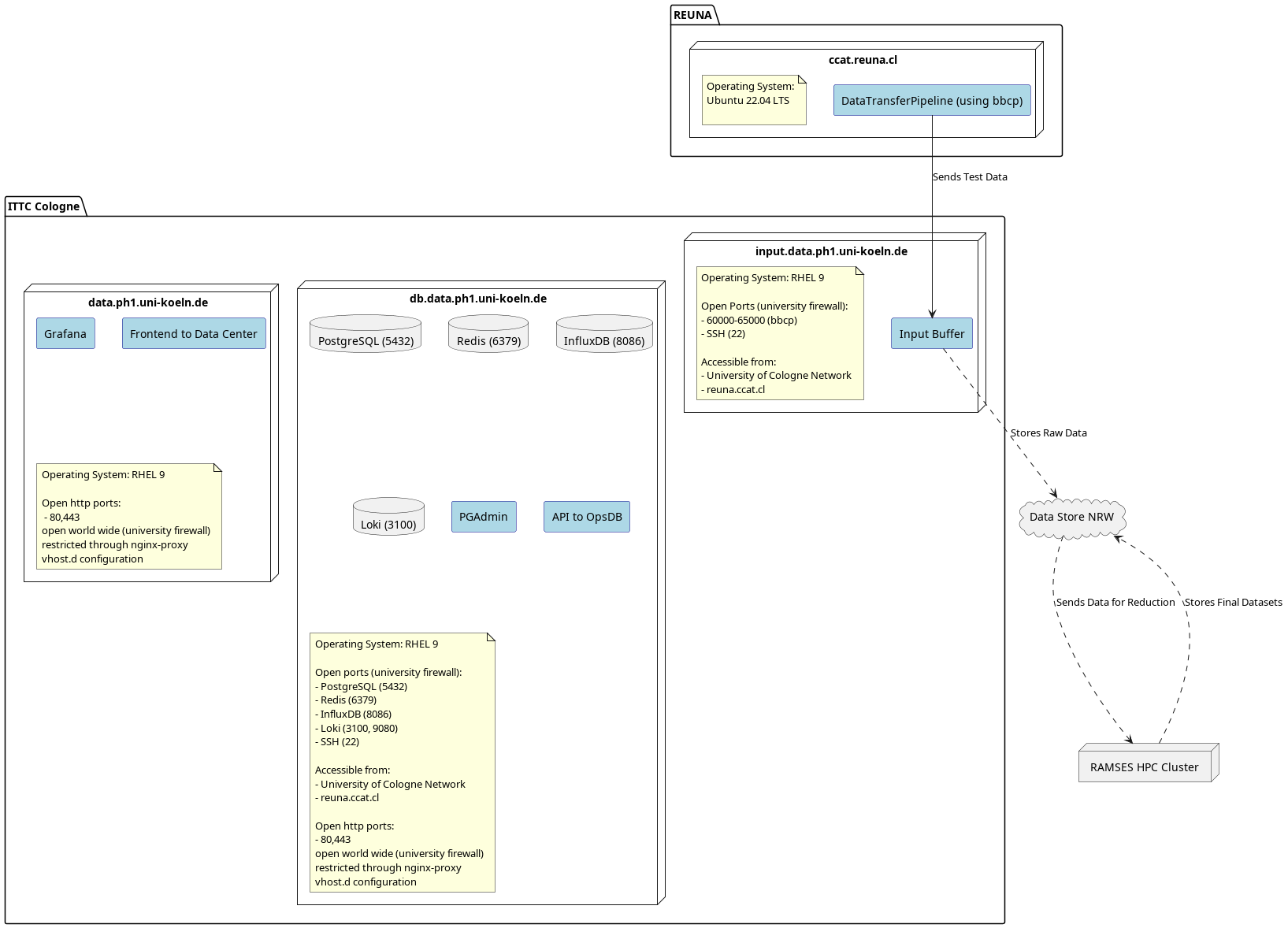
The CCAT Data Center consists of several integrated systems:
Data Management Layer
Operations Database - OpsDB - PostgreSQL database for observation metadata
Object Storage - DataStorage.NRW - S3 compatible object storage for raw and processed data files
Time-Series Database - InfluxDB for metrics and monitoring data
Logging Database - Loki for logging data
Transaction Buffering - Redis for transaction buffering and other caching needs
Application Layer
ops-db-api - RESTful API for data access and filing
ops-db-ui - Web interface for browsing and management
data-transfer - Automated data movement services
Infrastructure Layer
Container Platform - Docker and Kubernetes (on RAMSES)
Monitoring Stack - Monitoring & Observability - InfluxDB, Grafana, Loki, and Promtail for observability
Secrets Management - [Infisical](infisical_secrets_management) for credential management
Reverse Proxy - nginx for routing and SSL termination
CI/CD - GitHub Actions for automated builds and Jenkins for deployment
Configuration Management - Ansible for configuration management
** Hardware and Virtual Machine Layer**
- Input Nodes - Nodes for receiving data from the telescope
3 R640 servers in Serverhall 2 (high availability)
Telescope Data Buffer Node - Nodes for storing data at the telescope and transmitting it to the input nodes
Staging System - Virtual Machines in the Cologne Data Center for staging data
RAMSES HPC Cluster - HPC cluster for processing data
S3 Object Store - S3 compatible object storage for raw and processed data files
For a detailed overview of the hardware infrastructure, please refer to the /operations/hardware/index section.
Network Architecture#
Note
Detailed network diagrams and configuration will be added here.
The data center is accessible from:
Deployment Topology#
The deployment uses github actions to build docker containers for the different services and push them to the container registry. Then a local Jenkins server is used to deploy the services to the different environments. The entire stack is deployed using docker compose. Here we chose not to use Kubernetes to avoid the complexity of managing a Kubernetes cluster and the additional overhead of managing the different Kubernetes resources.
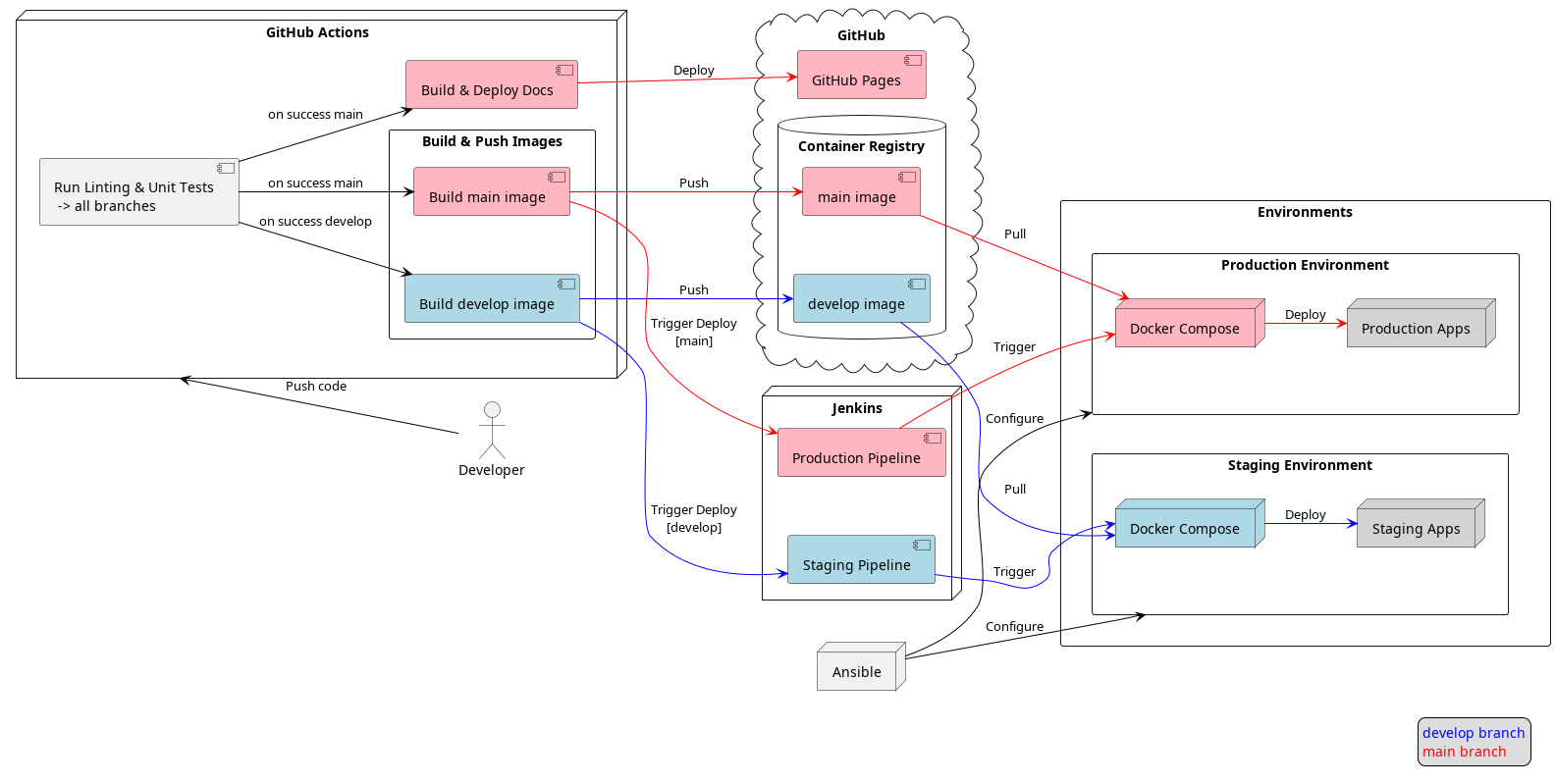
The system supports multiple deployment configurations:
Production - High availability, multi-node Kubernetes cluster
Staging - Virtual Machines in the Cologne Data Center
Local Development - Docker Compose for developer workstations and laptops
The integration of all services is defined int he CCAT System Integration Documentation repository.